
Solana Layer 2 Guide: Navigating Scalability Solutions
As the world of cryptocurrency continues to evolve, scalability remains a pivotal issue for blockchain networks. Solana, known for its high throughput and low latency, is at the forefront of this discussion. But what happens when the network faces congestion? This is where Layer 2 solutions come into play, providing much-needed relief and enhancing user experience.
In this guide, we will delve into the intricacies of Solana Layer 2 solutions, their real-world applications, and how you can leverage them effectively. With the increase in demand for faster transactions, understanding these solutions is crucial for developers, investors, and users alike.
Understanding Solana’s Unique Architecture
Before we dive into Layer 2 solutions, let’s understand what makes Solana stand out from other blockchains. Solana employs a unique architecture designed for speed and efficiency. It utilizes a combination of proof-of-history (PoH) and a multi-threaded processing model, allowing it to handle up to 65,000 transactions per second.
- Proof of History (PoH): A cryptographic timestamp that proves prior events occurred at a specific moment.
- Sealevel: Solana’s parallel smart contract runtime that allows multiple transactions to be processed concurrently.
- Pipelining: A transaction processing unit that leverages various hardware setups to ensure minimal bottlenecks.
However, as with any high-performance system, spikes in usage can lead to delays and increased transaction costs. This is where Layer 2 solutions become extremely beneficial.
What are Layer 2 Solutions?
Layer 2 solutions are protocols developed on top of a blockchain to enhance its capabilities, particularly in terms of scalability. They allow the network to process transactions off the main blockchain while still benefiting from its security. Solana’s ecosystem is rapidly expanding, and various Layer 2 solutions can help mitigate congestion issues, ensuring seamless user experiences.
Types of Layer 2 Solutions for Solana
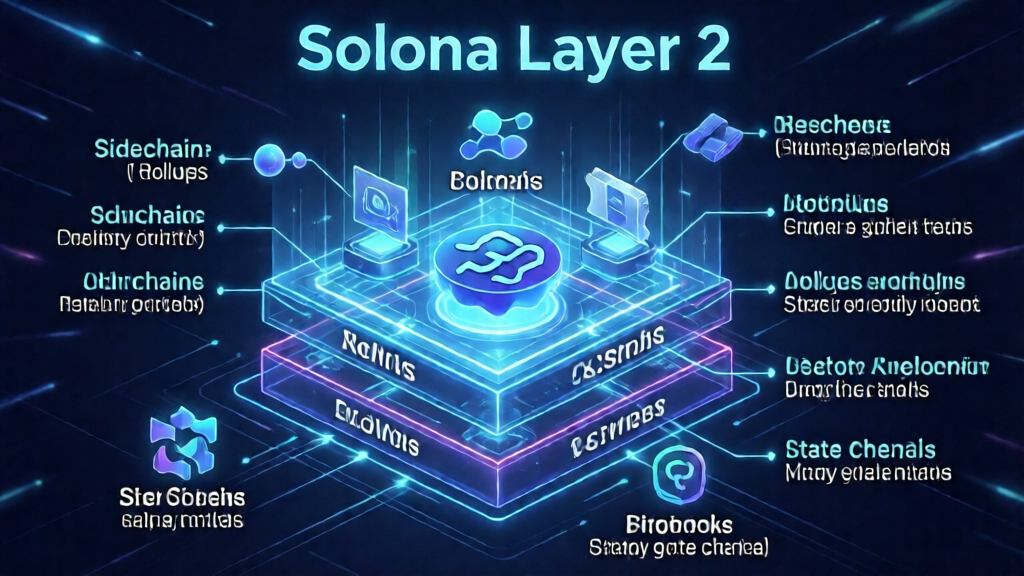
Several Layer 2 mechanisms can be implemented on Solana to enhance its scalability. Here are the most common types:
- Sidechains: Independent blockchains that run parallel to the main chain, connected by two-way pegs.
- State Channels: Private channels that allow for off-chain transactions between two parties, significantly reducing the number of transactions that need to be recorded on the main chain.
- Rollups: Solutions that bundle multiple transactions into a single transaction, reducing the load on the blockchain.
Each of these solutions provides specific advantages, and selecting the right one depends on the use case and desired outcome. Let’s break it down further.
Benefits of Solana Layer 2 Solutions
Implementing Layer 2 solutions on the Solana network comes with several notable benefits:
- Increased Throughput: Layer 2 solutions help to offload transactions from the main chain, resulting in higher overall capacity.
- Lower Transaction Fees: Users can save on costs as transactions are processed off the main chain.
- Faster Transaction Confirmation: With fewer congested blocks, transactions can be confirmed almost instantaneously.
- Improved User Experience: A more responsive network facilitates broader adoption.
These benefits will help both developers and users optimize their interactions with the Solana network.
Real-World Use Cases of Layer 2 Solutions on Solana
To illustrate how Layer 2 solutions can be applied in real-world scenarios, let’s look at a few use cases:
- Decentralized Finance (DeFi): Platforms like Serum leverage Layer 2 to facilitate quicker trades and lower fees, enhancing liquidity.
- Gaming: Games built on Solana can utilize state channels to enable players to conduct actions without delays, providing a smoother user experience.
- NFT Marketplaces: Layer 2 solutions can help in processing NFT transactions swiftly, catering to the growing demands of digital art collectors.
As more projects recognize these advantages, the implementation of Layer 2 solutions will likely expand.
Challenges of Implementing Layer 2 on Solana
Despite the many benefits, the implementation of Layer 2 solutions is not without its challenges:
- Complexity: Adding Layer 2 solutions may introduce complexity, making it more challenging for developers to maintain interoperability with the main chain.
- Security Concerns: Each Layer 2 solution must assure its security mechanisms, as vulnerabilities could compromise the entire ecosystem.
- User Education: Users must be educated on how to effectively navigate Layer 2 solutions to prevent issues.
Addressing these challenges is essential for the sustainable growth of Layer 2 solutions in the Solana ecosystem.
How to Implement Solana Layer 2 Solutions
If you are a developer interested in integrating Layer 2 solutions within your Solana project, here’s a simplified process to follow:
- Choose the Right Layer 2 Solution: Evaluate the needs of your project and select the most appropriate solution, whether it’s a sidechain or a rollup.
- Implement Smart Contracts: Develop and deploy smart contracts tailored to interact with the Layer 2 solution.
- Testing: Conduct thorough testing in various environments to ensure functionality and security before launching.
- Launch and Monitor: Once launched, continuously monitor performance and see if further tweaks or enhancements are necessary.
Implementing Layer 2 efficiently will help you capitalize on Solana’s impressive capabilities.
Conclusion: The Future of Solana Layer 2
As we look towards the future, Solana’s Layer 2 solutions are set to play a significant role in its growth. The demand for a fast, efficient, and cost-effective way to handle transactions is only increasing. By embracing these technologies, Solana can remain at the forefront of the blockchain revolution.
Remember, whether you are a developer, investor, or a casual user, understanding how to navigate the complexities of Layer 2 solutions will empower you to make informed decisions in your blockchain journey.
For more information on how to utilize the full potential of Solana Layer 2 solutions, visit btcmajor.
© 2023 – All rights reserved. This article has been authored by Dr. Emily Nguyen, a blockchain engineer with over 15 published papers in cryptography and the technical lead on several high-profile crypto audits.