
Understanding the Relative Strength Index (RSI) in Crypto Trading
In 2024, the cryptocurrency market experienced significant fluctuations, with some assets losing up to 70% of their value while others soared. According to a recent report, $4.1 billion was lost due to hacks and poor trading strategies. How can traders better navigate this volatile landscape? One effective tool is the Relative Strength Index (RSI).
What is the Relative Strength Index (RSI)?
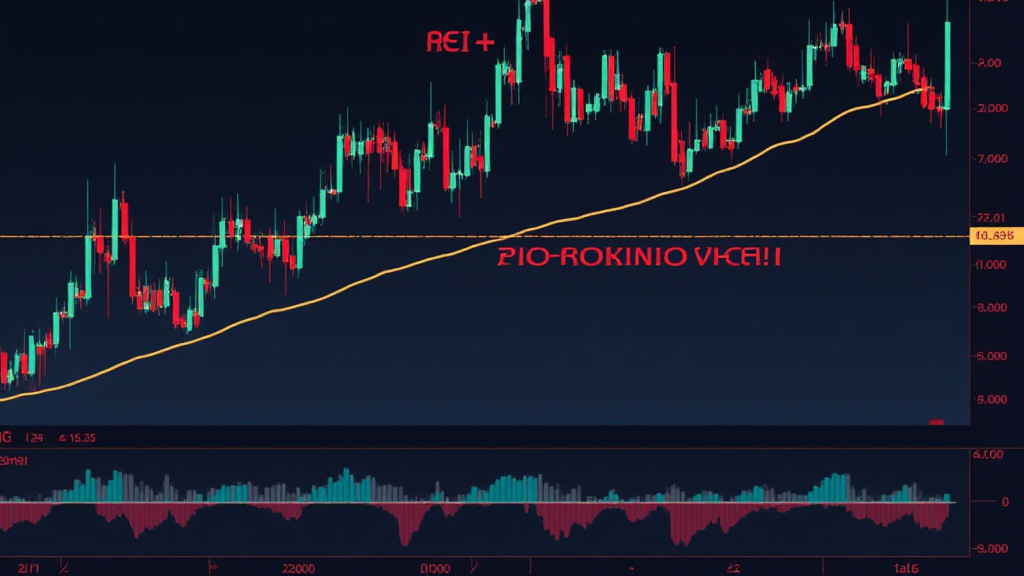
The Relative Strength Index (RSI) is a momentum oscillator that measures the speed and change of price movements. This tool is particularly useful in identifying overbought or oversold conditions in a market. By using the RSI, traders can make informed decisions on when to enter or exit trades.
- RSI values range from 0 to 100.
- An RSI above 70 typically indicates that an asset is overbought.
- An RSI below 30 suggests that an asset is oversold.
The Importance of RSI in Crypto Trading
With the increase of Vietnamese users participating in cryptocurrency trading (growing by over 30% in the last year alone), the necessity for reliable trading strategies is paramount. The RSI can help traders avoid potential pitfalls in this rapidly changing market.
Here’s the catch: while an overbought asset may continue to rise, it might be a signal for traders to consider profit-taking. In contrast, oversold assets can indicate potential buying opportunities.
Interpreting the RSI: Practical Examples
Let’s break it down with examples:
- If Bitcoin (BTC) has an RSI of 75, traders might expect a pullback.
- Conversely, if Ethereum (ETH) shows an RSI of 25, it could be a potential buy signal.
Analysts often look for divergences between the RSI and price action to confirm trends. For example, if the price of an asset hits a new high while the RSI does not, this divergence could indicate weakening momentum.
RSI Strategies for Crypto Traders
Traders can deploy various strategies when leveraging the RSI:
- RSI Trendline Strategy: Draw trendlines on RSI to capture breakouts.
- RSI Overbought/Oversold Strategy: Use cutoff points of 30 and 70 to trigger buys and sells.
Combining RSI with Other Indicators
For enhanced effectiveness, traders should not rely solely on RSI. Instead, integrating it with other indicators, such as Moving Averages (MAs) or MACD, can provide a safety net in decision-making. For instance:
Combining an overbought RSI with a bearish moving average crossover can strengthen a sell signal.
Real-World Application of RSI: A Case Study
Consider the 2023 market where Ripple’s XRP showed an RSI spike to 85 before a significant price correction. This was a classic illustration of RSI signaling a potential sell-off, allowing savvy traders to exit early and mitigate their losses.
Global Context & Vietnam Market Influence
As the global cryptocurrency market continues to evolve, local markets like Vietnam play a crucial role. The surge in Vietnamese crypto investors necessitates tools like RSI for informed trading decisions. With numerous exchanges available, choosing a platform that offers technical analysis tools can greatly benefit users.
Final Thoughts on RSI in Crypto
In the unpredictable world of cryptocurrency trading, tools like the Relative Strength Index (RSI) can arm traders with valuable insights. As the Vietnamese market thrives with a growing user base, understanding and applying RSI effectively can contribute to more strategic trading outcomes.
To summarize, while the RSI is a powerful tool, it is essential to use it in conjunction with a comprehensive trading strategy. Traders should continuously educate themselves about market conditions and remain agile in their approach.
For users navigating these dynamics, remember that understanding your tools like the RSI can elevate your trading game significantly. Not financial advice. Consult local regulators for guidance.
For more insights into the crypto world and practices such as tiêu chuẩn an ninh blockchain, visit btcmajor.
Written by Dr. Alex Nguyen, a cryptocurrency analyst with over 20 publications in the field and a key contributor to major blockchain audits.