
Exploring Blockchain Scalability Solutions
With approximately $4.1 billion lost to DeFi hacks in 2024, the call for improved blockchain scalability solutions has never been more urgent. As the demand for cryptocurrencies and decentralized applications continues to surge, scalability—or the blockchain’s ability to handle an increasing number of transactions—is crucial for sustaining growth and user trust. This article will explore various blockchain scalability solutions, their implications, and challenges, giving a comprehensive overview of how these solutions can empower the evolving cryptocurrency landscape.
Understanding Blockchain Scalability
Blockchain scalability refers to the capacity of a blockchain network to handle a growing amount of work or its potential to enlarge to accommodate that growth. In simpler terms, it’s how effectively a blockchain can manage more transactions without compromising speed or security.
- On average, Bitcoin processes around 7 transactions per second (TPS), while Ethereum handles about 30 TPS.
- In contrast, traditional systems like Visa can process over 24,000 TPS.
The disparity between transaction speeds poses significant challenges for blockchain adoption, particularly in high-frequency transaction environments like finance and e-commerce. To ensure broad acceptance, blockchain networks must implement effective scalability solutions.
Types of Blockchain Scalability Solutions
Several scalability solutions have emerged to address the limitations of existing blockchain networks. These can be categorized into two primary types: on-chain and off-chain solutions.
On-Chain Scalability Solutions
On-chain scalability solutions involve modifications to the blockchain protocol itself to enhance its transaction capability.
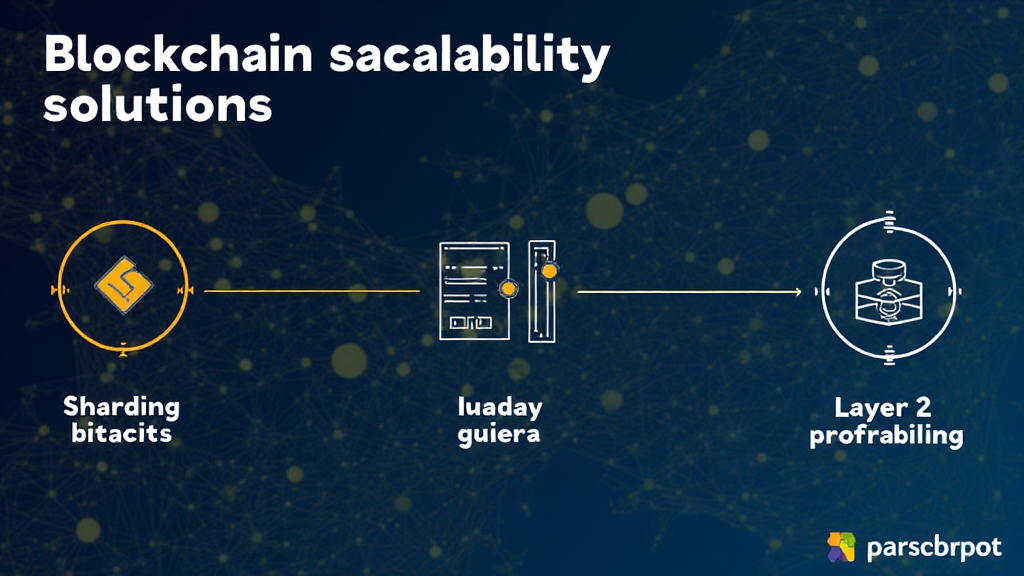
- Sharding: This technique involves splitting the blockchain into smaller, more manageable pieces known as shards. Each shard processes its transactions, increasing overall network throughput.
- Layer 2 Protocols: Technologies like the Lightning Network for Bitcoin and Plasma for Ethereum enable transactions to occur off the main blockchain while relying on its security. This significantly enhances transaction speeds.
Off-Chain Scalability Solutions
Off-chain solutions help alleviate congestion on the blockchain by taking transactions off the main chain while ensuring security and data integrity.
- State Channels: These allow users to transact off-chain while leveraging the underlying blockchain to settle disputes and ensure finality.
- Sidechains: These are independent blockchains that operate in parallel to the main chain, enabling asset transfers between them without impacting the main network.
Challenges in Implementing Scalability Solutions
While scalability solutions present numerous benefits, they also come with inherent challenges:
- Security Risks: Scaling a network can expose vulnerabilities. For instance, implementing sharding can lead to greater attack surfaces.
- Increased Complexity: Introducing scaling solutions often adds complexity to the network, making them harder to manage and understand.
- Decentralization Trade-offs: Solutions may inadvertently centralize control when certain parties dominate transaction processing, undermining blockchain’s fundamental principles.
The Role of Governance in Scalability Solutions
Governance plays a pivotal role in determining which scalability solutions to adopt. Different blockchain communities have varying degrees of decentralization and governance mechanisms. For example:
- In the case of Ethereum, the community debates proposals like Ethereum Improvement Proposals (EIPs) that influence scalability decisions.
- Bitcoin’s governance is more conservative, prioritizing security and stability over rapid innovation.
For scalability solutions to succeed, their implementation must consider a balance between innovation, security, and community consensus.
Case Studies: Successful Scalability Implementations
Several projects have successfully implemented scalability solutions, showcasing their potential.
- Ethereum 2.0: The long-awaited transition to Ethereum 2.0 aims to increase transaction throughput by adopting a proof-of-stake consensus mechanism and introducing sharding.
- Polygon: This layer 2 scaling solution has enabled Ethereum to increase its TPS significantly while maintaining low transaction fees and high security.
Future Trends in Blockchain Scalability
The future of scalability solutions will likely involve continued advancements and refinements:
- The integration of artificial intelligence (AI) for optimizing transaction flows and increasing network efficiency is on the horizon.
- Hybrid solutions that combine both on-chain and off-chain techniques may emerge, maximizing efficiency while minimizing risk.
- In regions like Vietnam, with a rapidly growing user base, tailored solutions that cater to local needs will become critical. Over 10% of the Vietnamese population is now involved in cryptocurrency trading, indicating that scalable blockchain solutions are essential for local adoption.
Conclusion
In summary, blockchain scalability solutions are essential for enhancing transaction capacity, improving user experience, and ensuring the longevity of blockchain networks. As we’ve explored, various strategies—ranging from sharding to off-chain solutions—offer promising avenues for overcoming current limitations. However, the challenge will be implementing these solutions in a manner that preserves security, decentralization, and community consensus.
As the blockchain industry evolves, staying informed about the latest scalability tactics will be vital for developers, investors, and users alike. Whether you’re looking to optimize your crypto transactions or ensure your project can handle exponential growth, understanding and implementing these blockchain scalability solutions may pave the way for success in an increasingly digitized economy. Explore more about significant developments in this domain by visiting hibt.com.
For comprehensive insights and analysis, we recommend keeping an eye on authoritative resources and engaging with communities working on these solutions.
Disclaimer: This article is for informational purposes only and should not be considered as financial advice. Always consult with local regulators.
—
Author: Dr. Nguyễn Thái Bình, a blockchain analyst with over 15 published papers and a lead auditor for major cryptocurrency projects. Specializing in decentralized finance and regulatory compliance, Dr. Bình has contributed significantly to shaping the landscape of modern blockchain innovations.